
What Are the Common Signs of Roof Damage in Older Leeds Properties?
We spend most of our working week on roofs that are older than the people living underneath them. Leeds has no shortage of them back-to-back terraces in Beeston, Victorian bay-fronted houses in Chapel Allerton, Edwardian semis around Roundhay, 1930s pebble-dash semis out towards Morley and Pudsey. Every one of these roofs ages differently, but the warning signs tend to repeat themselves, and most homeowners simply don’t know what they’re looking at until a repair has already turned into a bigger job.
This guide covers what those signs actually look like, why they happen more often on older Leeds properties than newer builds, and how to tell whether you’re looking at a straightforward repair or something more serious.
How Can You Tell If Your Roof Needs Repairing?
Most roof problems announce themselves in one of two ways something looks wrong from outside, or something shows up inside the house. Outside, you’re looking for slipped or missing slates and tiles, sagging along the ridge line, cracked or lifted flashing around chimneys, and moss or vegetation building up in patches. Inside, the signs are usually damp patches on ceilings, a musty smell in the loft, dark staining on roof timbers, or daylight visible through the roof felt when you go up with a torch.
None of these signs need to be dramatic to matter. A single slipped slate looks trivial from the pavement, but it’s an open gap that lets water in every time it rains. We’ve lost count of the number of jobs that started as “just one tile” a homeowner noticed and turned out to be several months of slow water ingress once we got up there.
What Causes Roof Damage in Older Leeds Homes?
Age is the obvious factor, but it’s rarely age on its own. It’s age combined with the specific way Leeds weather works, and the specific way older roofs were built in the first place.
Victorian and Edwardian Terraces
Victorian terraces across areas like Armley, Hyde Park and Burley were mostly built with slate roofs on timber battens, often with minimal underlay by modern standards, if there’s any at all. A century or more of thermal movement leaves the original nails corroded and brittle, which is why slates that look sound often slip during a windy spell rather than being physically broken. Edwardian homes follow a similar pattern, though you’ll more often see decorative detailing around dormers and bays that adds extra joints, and extra joints mean extra places for water to find a way in.
1930s Semi-Detached Houses
These roofs are usually a step up in construction quality, often with concrete or clay tiles rather than slate, but they’re approaching a century old themselves now in many cases. Concrete tiles have a longer lifespan than people expect, but the mortar bedding that holds ridge tiles and verges in place doesn’t last as long, and that’s usually the first thing to go on a 1930s semi.
Yorkshire Weather
Leeds gets a particular combination that’s harder on roofs than milder parts of the country: heavy rainfall through autumn and winter, strong westerly winds that catch exposed gable ends, and repeated freeze-thaw cycles as temperatures hover around zero for weeks at a time. Water that gets into a hairline crack in a slate or a piece of mortar freezes overnight, expands, and widens that crack. Do that forty or fifty times across a winter and small imperfections become real gaps.
Common Roofing Materials on Older Leeds Properties (and How They Fail)
Stone Slate and Welsh Slate
Stone slate, common on older properties particularly on the outskirts of Leeds, is heavy, durable, but brittle. It cracks under impact or frost rather than wearing down gradually. Welsh slate, more common on Victorian terraces, is thinner and can delaminate over time, meaning it splits into thin layers and loses its waterproofing along the split.
Clay and Concrete Tiles
Clay tiles, seen on some Edwardian and interwar properties, are prone to frost damage if they’ve absorbed water, since the surface can spall or flake away in cold snaps. Concrete tiles hold up well structurally but can go porous with age, meaning they soak up more water than they used to and take longer to dry out, which adds weight and stress to the roof structure over time.
Lead Flashing
Lead is still the standard material for flashing around chimneys, valleys and abutments on older Leeds roofs, and it’s genuinely durable stuff when installed properly. The usual failure isn’t the lead itself but the mortar chase it’s tucked into, which erodes and lets the flashing pull loose, or thermal movement over decades that eventually cracks the lead at stress points.
Warning Signs Roofers Notice Before Homeowners Do
Part of the job is spotting things before they become somebody’s ceiling stain. A few things we look for that most homeowners walk past without a second glance:
- Slight colour variation in roof tiles from the ground, which often means one area has been retaining moisture longer than the rest
- A faint sag along the ridge that’s easy to miss unless you stand at the right angle down the street
- Nail heads or fixing points showing rust streaks below them on the slate surface
- Gutters that overflow in only one spot during rain, usually pointing to a blockage or a dip in the roofline above it
- Mortar dust or small debris collecting in gutters, a sign the ridge or verge pointing is starting to break down
None of these are emergencies on their own. But they’re the sort of thing that, caught early, is a half-day repair rather than a scaffold job six months later.
Can a Small Roof Leak Become a Bigger Problem?
Almost always, yes. Water rarely stays where it enters. Once it’s past the outer covering it follows the path of least resistance across the felt or boarding, along rafters, and can travel a metre or more from the actual gap before it ever shows up as a stain on a ceiling below. That’s why the size of a ceiling stain tells you very little about the size of the actual problem we’ve opened up small, innocent-looking marks and found several square metres of soaked, blackened timber behind them.
Left long enough, that moisture doesn’t just sit there. It softens timber, encourages rot, and in a loft space it can start affecting insulation and even the plasterboard ceiling below. What starts as a repair measured in tens of pounds can, given enough time, become a job involving replacing timber, boarding, and decorating a room from scratch.
How Damp Spreads Through an Older Roof
On older Leeds properties without a modern breathable membrane under the tiles, there’s often very little standing between a slipped slate and the timber structure underneath. Damp tracks along the underside of the roof covering, pools at low points, and soaks into whatever it touches, felt, batten, rafter, insulation. In a loft that isn’t regularly checked, this can carry on quietly for a long time, since lofts aren’t somewhere most people look more than once or twice a year.
The other thing damp does is invite further damage. Damp timber is softer, which means fixings hold less securely, which means more slates loosen in the next windy spell. It’s a cycle that gets worse the longer it’s ignored, which is really the whole argument for catching these signs early rather than waiting.

Chimneys, Dormers and Valleys: The Usual Weak Points
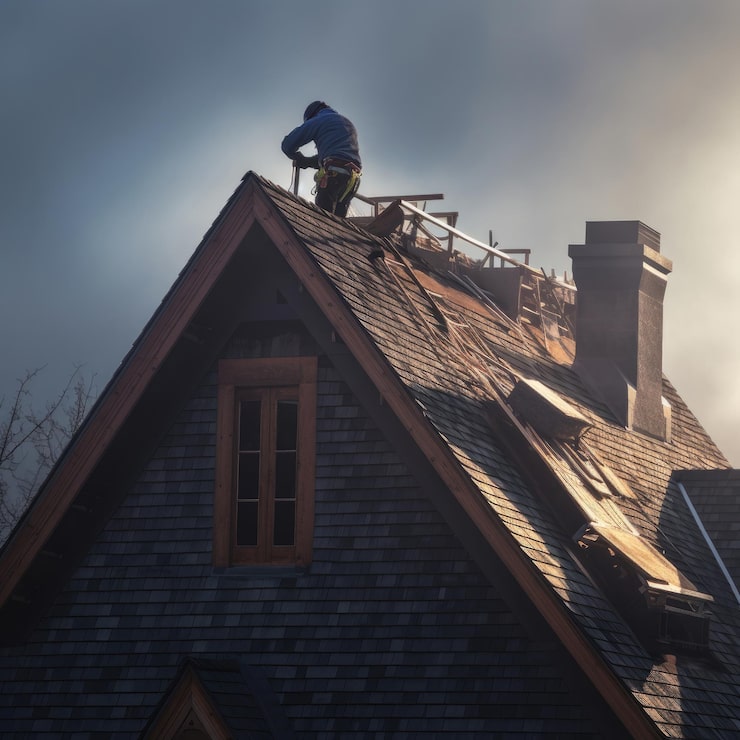
If we had to bet on where a leak was coming from before even looking, chimneys would top the list. They’re a break in an otherwise continuous roof surface, which means flashing, mortar and pointing all have to work together to keep water out, and any one of those failing is enough to cause a leak. Dormers carry the same risk for the same reason — more joints, more places for water to get in.
Valleys, where two roof slopes meet, concentrate a huge amount of water flow into a narrow channel, especially during heavy Yorkshire downpours. Any debris, cracked lead lining or displaced tile in a valley causes water to back up rather than run off, and that backed-up water finds gaps that would never be a problem on a flat, open slope.
Moss, Blocked Gutters and Ageing Mortar
These three tend to arrive together on an older roof that hasn’t had much attention. Moss builds up on shaded, north-facing slopes and slowly works into the small imperfections on ageing tiles, holding moisture against the surface far longer than a clean roof would. As it grows, it can lift tile edges slightly, which is enough to let wind-driven rain underneath.
Gutters clogged with moss debris and leaves stop draining properly, and water backs up under the lowest course of tiles or over the edge and down the wall, which over time damages both the roofline and the brickwork below it. Ageing mortar, particularly around ridge tiles and verges on 1930s and older properties, becomes crumbly and porous, and once it starts flaking away, the tiles it was holding in place become vulnerable to wind lift.
Repair or Replace? How to Decide
This comes down to how localised the damage is and what condition the roof is in as a whole. A repair makes sense when the problem is contained: a section of slipped slates, a cracked ridge tile, a piece of failed flashing around one chimney. These are targeted fixes that restore the roof to a sound condition without touching anything that isn’t actually a problem.
Replacement, whether that’s a full re-roof or a significant partial one, becomes the sensible option when the covering shows widespread wear across most of the roof, when there have already been several rounds of patch repairs in different spots, or when the underlying timber structure has been compromised by long-term damp. At that point, further repairs are really just delaying an inevitable bigger job, and often cost more in total than doing the larger work once.
A proper inspection is the only reliable way to know which category a roof falls into. Photos from the ground can suggest an answer but rarely give the full picture.
Cost Considerations (Without the Guesswork)
We won’t quote figures here because it genuinely depends on the roof, the material, and the access required, and any roofer who gives you a number before seeing the job is guessing. What we will say is that the cost gap between a repair caught early and the same problem left for a year or two is usually significant, simply because of how much water damage can spread in that time. Scaffolding, if it’s needed, tends to be a bigger factor in overall cost than the repair itself for smaller jobs, which is worth bearing in mind if a roofer suggests bundling several minor repairs into one visit.
Seasonal Roofing Advice for Leeds Homeowners
Autumn is the best time for a check, ideally before the worst of the winter rain and wind arrives. Clear gutters of leaves and moss debris, and get any loose slates or tiles fixed before frost has a chance to work on existing cracks. Over winter, a quick visual check after any named storm or period of strong wind is worth doing, since that’s when slipped slates and lifted flashing most often first appear. Spring is a sensible time to check for any damage that happened over winter but hasn’t yet shown up as an indoor leak, since melting frost and heavier rain can reveal problems that stayed hidden while everything was frozen solid.
Advice for Landlords
Rented properties often go longer between anyone actually looking closely at the roof, simply because tenants aren’t always in a position to notice early warning signs the way an owner-occupier checking their own home might. An annual inspection is worth building into a maintenance schedule, both to catch problems while they’re still small and to have a documented record of the property’s condition, which matters if a dispute ever comes up about repairs or the state of the building.
Advice for Buyers
If you’re buying an older Leeds property, ask directly when the roof was last re-covered or had significant work done, and don’t rely on a general survey comment alone if the roof looks original. Sagging rooflines visible from the street, patched areas of mismatched tiles, and any staining mentioned in the loft space are all worth having a roofer look at before you commit, since roof work is one of the more expensive things to discover you need shortly after moving in.
Emergency Situations: When You Can’t Wait for a Routine Visit
Some situations need same-day attention rather than a scheduled inspection. Active water coming through a ceiling, a large area of missing tiles after a storm, or a chimney stack that looks visibly unstable all fall into this category. In these cases the priority is stopping further water ingress or making the property safe, with a fuller repair to follow once the immediate risk is dealt with.
Insurance Considerations
Sudden damage, a storm ripping tiles off, a branch coming down on the roof, is usually covered under standard buildings insurance. Gradual deterioration from age or lack of maintenance generally isn’t, and insurers will often ask when the roof was last checked if a claim is made. Keeping a simple record of any inspections and repairs, even just dated photos, makes a genuine difference if you ever need to support a claim.
The Safest Way to Inspect a Roof
A ground-level check with binoculars covers a surprising amount: missing or slipped tiles, sagging lines, damaged flashing around chimneys, and obvious moss build-up are all visible from the pavement or garden if you know where to look. Inside, a loft check with a torch is useful and low-risk look for damp timber, staining on felt or boarding, and any daylight showing through gaps that shouldn’t be there.
Getting onto the roof itself is a different matter. Older coverings can be more fragile than they look, and it’s genuinely not worth the risk without the right training, harness and access equipment. If what you’ve spotted from the ground or loft needs a closer look, that’s the point to call in a roofer rather than reach for a ladder.
Mistakes Homeowners Make
The most common one is waiting. A slipped slate or small damp patch rarely gets better on its own, and the longer it’s left, the more it tends to spread. A close second is DIY repairs using the wrong materials, silicone sealant over a flashing joint instead of proper leadwork, for example, which often traps moisture rather than keeping it out and makes the eventual proper repair more involved. Ignoring the loft is another one; most damage is visible up there well before it reaches a ceiling, but it’s the one part of the house that rarely gets checked.
Questions to Ask a Roofer
- What exactly is causing the damage, not just where it’s showing up
- Whether the fix is a genuine repair or a temporary patch
- What the roof covering and structure looked like once they were up there, not just the specific problem area
- Whether the quote is fixed or could change once work starts
- Whether any guarantee applies to the work carried out
Preparing Before a Roof Inspection
Note down where and when you’ve noticed any signs, a stain that appeared after a particular storm, a smell that’s only there in damp weather, since timing can help pinpoint the cause. Clear loft access if it’s boarded or stored with belongings, and if you’ve taken any photos of the roof from the ground, particularly after recent weather, having them ready saves time.
Annual Maintenance Checklist
- Clear gutters and downpipes of leaves, moss and debris
- Check for slipped, cracked or missing tiles from ground level
- Look for green staining on brickwork below the roofline
- Check the loft for damp timber, staining or daylight gaps
- Look at chimney flashing and pointing for visible cracks
- Check ridge and verge mortar for crumbling or gaps
- Book a professional inspection if the roof is over 40 years old or hasn’t been checked in the last year
When Should You Call a Roof Repair Specialist?
As soon as you notice any of the signs covered here, rather than waiting for them to get worse. A slipped slate, a damp patch, a bit of sagging along the ridge, none of these need to be an emergency to be worth a call. Catching them early is consistently the difference between a straightforward repair and a much bigger job once water has had months to work its way through an older roof structure.
Frequently Asked Questions
If the damage is limited to one area, such as a cracked ridge tile, a section of loose slates or a failed piece of flashing, repair is usually enough. If the roof covering is showing widespread wear, several layers of previous patch repairs, or the underlying timbers are affected, a full or partial re-roof tends to be the more sensible long-term option. A roofer can normally tell you which category your roof falls into after a proper inspection.
The earliest signs are often indoors rather than on the roof itself: a faint brown ring on a bedroom ceiling, a musty smell in the loft, or damp patches near a chimney breast. Outside, look for missing or slipped slates, gaps around flashing, and green staining on brickwork below the roofline, which usually points to water running down from a damaged joint above.
Many older Leeds homes still have their original stone slate, Welsh slate or lead detailing, some of it well over a century old. Materials that age naturally lose flexibility and grip, mortar bedding crumbles, and fixing nails corrode. Combined with Yorkshire’s wet winters and repeated freeze-thaw cycles, these ageing components fail faster than they would on a newer, better-insulated roof.
You can do a safe visual check from ground level using binoculars, looking for missing tiles, sagging lines, or damaged flashing, and from inside the loft, checking for damp timber, daylight coming through, or staining on the felt. Climbing onto the roof itself is not something we’d recommend without training and the right equipment, since older coverings can be more fragile than they look.
Cost depends entirely on the extent of the damage, the roof type, and access. A small repair such as replacing a handful of slipped slates is a modest job, while flashing repairs, valley work, or repairs involving scaffolding cost more. Rather than guess, most reputable Leeds roofers will offer a fixed-price quote after seeing the roof, either in photos or in person.
Moss thrives where a roof slope stays damp and shaded for long periods, which is common on north-facing pitches in Leeds. It takes hold in the small pits and edges of ageing tiles, holding moisture against the surface and gradually working into hairline cracks. Left unchecked it can lift tiles slightly and block the natural run-off path for rainwater.
Sudden damage from storms, falling branches or similar one-off events is usually covered under standard buildings insurance. Gradual deterioration from age, wear, or lack of maintenance generally isn’t, which is why insurers often ask when a roof was last inspected. Keeping a record of maintenance and any repairs helps if you ever need to make a claim.
For a roof over 40 or 50 years old, once a year is a sensible minimum, ideally in autumn before the worst of the winter weather arrives. After any significant storm or period of strong wind, a quick visual check is worth doing too, since that’s when slipped slates and loosened flashing tend to first appear.
Flashing is the strip of material, usually lead on older Leeds properties, that seals the joint between a roof slope and a chimney, wall, or dormer. It fails through a mix of age, thermal movement, and mortar erosion in the chase it’s tucked into. Once the seal breaks, water finds its way in at exactly the point where two surfaces meet, which is why chimney leaks are so common.
Yes, and it usually does if left alone. Water that gets past the outer covering doesn’t stay in one place. It tracks along felt and timber, soaks into insulation, and can travel a surprising distance from the original entry point before it shows up as a stain on a ceiling. By the time it’s visible indoors, the timber above has often been wet for weeks or months.
It’s worth it, yes. Rented properties often go longer between anyone actually looking closely at the roof, since tenants aren’t always in a position to notice early signs the way an owner-occupier might. An annual check also supports a landlord’s general repairing obligations and gives a paper trail if a dispute ever arises over the property’s condition.
Ask when the roof was last re-covered or significantly repaired, and look for a survey that specifically comments on the roof structure and covering rather than a general overview. Sagging rooflines, patched areas visible from the street, and staining in the loft are worth flagging to your surveyor or getting a roofer to look at before you commit to a purchase.
Noticed any of these signs on your own roof?
DDK Roofing Leeds Ltd has been working on roofs across Leeds and West Yorkshire for over 22 years, from Victorian terraces to 1930s semis, and our roofers are NVQ qualified and CORC approved. If you’d like an honest opinion on what you’re looking at, get in touch to arrange a roof inspection or repair.
Related reading: Roof Repairs · Emergency Roof Repairs · Flat Roof Repairs · Roof Inspections · Slate Roof Repairs · Tile Roof Repairs · Chimney Repairs · Leadwork · Guttering · Contact Us