
How to Clean Gutters: A Simple, Step‑by‑Step Guide for Homeowners (2026)
Clean gutters at least twice a year (spring and autumn), more often if you have trees nearby or after storms. Clean, well‑working gutters stop water damage to your roof, walls, and foundation and save you money on repairs.
This guide is only about gutter cleaning. It explains the common gutter problems you’ll face, how each problem damages your home, and clear step‑by‑step solutions you can do yourself or get a pro to do. Language is simple so anyone even a child in year five can follow it. DDK Roofing Leeds provides inspections and professional gutter cleaning across Leeds when you need help.
Why gutter cleaning matters
- Gutters carry rainwater away from your roof, walls and foundation.
- Blocked gutters cause overflowing water, roof leaks, damp, mould, and foundation damage.
- Debris in gutters attracts pests and encourages rot.
If gutters don’t work, small problems quickly become expensive repairs.
Common gutter problems — what goes wrong and why it matters
Blocked gutters
Problem: Water can’t flow to downpipes.
Damage: Water spills over the eaves, soaks walls, and can enter the loft.
Quick fix: Remove debris and flush with a hose (see step‑by‑step below).
Downpipe blockages
Problem: Water can’t leave the gutter system.
Damage: Water backs up and overflows at low points, causing ground pooling and foundation risk.
Quick fix: Clear downpipe with a plumber’s snake or use a pressure hose from the top.
Sagging or detached gutters
Problem: Clips or fascia fixings have failed or gutters are full and heavy.
Damage: Water pools in the sag, spills, and adds weight that damages fascia boards.
Quick fix: Re‑secure clips or call a roofer if wood or fascias are rotten.
Holes, rust or cracked gutters (metal) / splits in uPVC
Problem: Material failure from age or storm damage.
Damage: Leaks at the damaged section; steady loss of gutter integrity.
Quick fix: Patch small holes with silicone and a patch; replace long damaged lengths.
Poor slope/gradient
Problem: Gutters sit flat instead of sloping to the downpipe.
Damage: Water pools and sediment builds up, accelerating damage.
Quick fix: Re‑adjust hangers to create correct fall (pro recommended for full correction).
Leaking joins and end caps
Problem: Sealant has failed or joints were fitted poorly.
Damage: Slow drips create stains, rot and attract pests.
Quick fix: Reseal joins with suitable gutter sealant or replace worn connectors.
What tools and safety gear you need
- Strong ladder (with someone to steady it if possible).
- Gloves (thick, waterproof).
- Gutter scoop or small trowel.
- Bucket or debris bag.
- Garden hose (hose nozzle to flush).
- Plumber’s snake or long rod for downpipes.
- Silicone sealant or gutter repair tape.
- Safety goggles (to avoid falling debris).
- Telescopic gutter cleaning pole (if you prefer working from the ground).
Step‑by‑step gutter cleaning (safe DIY method)
Prepare and be safe
Park your ladder on level ground and have a partner steady it.
Wear gloves and goggles.
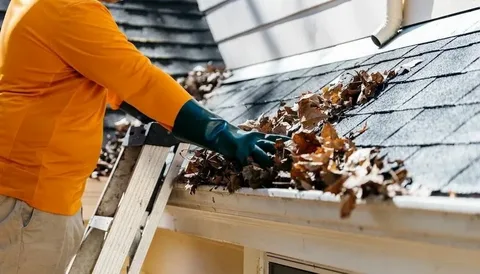
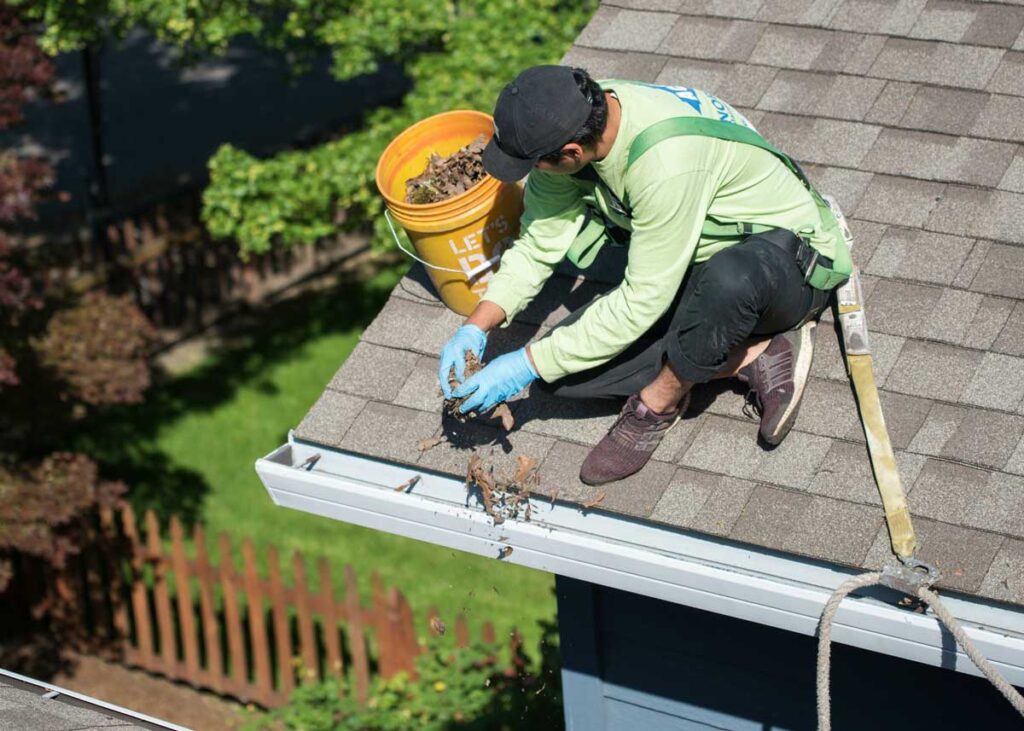
Remove large debris from the gutter by hand or with a scoop.
Scoop debris into bucket or bag
Work in short sections to avoid overreaching.
Place debris into bucket; don’t push it through the downpipe.
Check and clear downpipes
Run water into the gutter with a hose.
If water does not flow down, clear the downpipe with a plumber’s snake or push from the top using a long rod.
If still blocked, remove the lower end of the downpipe and clear the blockage.
Flush and inspect
After debris clears, flush the full run with a hose to check for leaks and correct flow.
Watch for drips under joints and at end caps.
Repair small issues immediately
Use gutter sealant at leaking joins and end caps.
Patch small holes with repair tape or silicone and mesh.
Tighten loose brackets or replace clips.
Final check and tidy up
Make sure water flows to the downpipe and that there is no pooling.
Clear away debris from the ground so it does not wash back into gutters.
Ground‑only cleaning options
- Use telescopic poles with curved attachments or special gutter vacuums.
- Use a pressure nozzle on a long hose to blow debris toward the downpipe.
- These methods are safer but can miss heavy blockages or damage found only by close inspection.
When you should call a professional
- Your gutters are high or above a steep roof line.
- The fascia or soffit looks rotten.
- You find signs of structural water damage or large leaks.
- You prefer a guarantee and full inspection.
DDK Roofing Leeds offers professional cleaning, repairs and replacement services across Leeds. Professionals spot hidden problems (rot, broken fixings, poor fall) early so you avoid bigger bills later.
How often to clean gutters
- Standard homes: twice a year spring and autumn.
- Homes with overhanging trees: every 3 months.
- After big storms: inspect immediately.
- Older systems: more frequent checks if material is past service life.
Gutter repairs vs full replacement quick checklist
Repair when:
- Damage is local and limited.
- Gutters have small holes or loose clips.
- Fascia and structure are sound.
Replace when:
- Gutters sag across long runs.
- Multiple holes, severe rust, or repeated failures.
- Fascia boards are rotten or the gutter system is past life expectancy.
Replacement often costs more up front but is better value if repairs would be repetitive or short‑lived.
Cost guide (UK, mid‑2026) — approximate
- Basic DIY cleaning: your time and small materials.
- Pro clean (standard house): £60–£120.
- Pro clean (large/multi‑storey): £120–£250.
- Simple repair (sealant, clip): £50–£150.
- Gutter replacement: around £30–£50 per metre for uPVC; higher for metal or cast iron.
(Prices vary by region and complexity; ask for a written quote.)
How to prevent future blockages
- Fit good gutter guards or mesh to keep leaves out.
- Trim overhanging branches.
- Install leaf filters at downpipes.
- Keep trees and gardens tidy in autumn.
- Check after storms and high winds.
Emergency checklist for leaking gutters
- Move valuables away from affected walls and foundation.
- Use buckets to catch water.
- If safe, place a tarp over the area temporarily.
- Call DDK Roofing Leeds for a fast inspection and temporary protection if needed.
Why DDK Roofing Leeds?
- Local experts in Leeds with experience in cleaning, repair, and replacement.
- We inspect while we clean, so you get a full condition report.
- Transparent quotes and professional guarantees.
- We can fit long‑term solutions like leaf guards and full gutter replacements to stop repeat visits.
Short seasonal checklist
Spring: clear winter debris, check joints after frost, test downpipes.
Autumn: remove falling leaves, fit guards if needed, inspect before winter storms.
Final note
Clean gutters are one of the simplest ways to protect your home and avoid costly repairs. Regular checks, quick small repairs, and professional inspections when needed keep your roof, walls and foundation safe.
Need help? DDK Roofing Leeds provides gutter cleaning, repair and replacement for homes across Leeds. Contact us for a professional inspection and a clear, no‑surprise quote.
Frequently Asked Questions
Water overflows during rain, you see plants or moss growing in the gutter, or water pools by the foundation after heavy rain.
They help a lot but no guard is 100% perfect. Guards reduce cleaning frequency and block most leaf debris.
Use low pressure. High pressure can damage seals and uPVC gutters. Test gently first.
Small repairs are DIY‑friendly (sealant, clips, small patches). For high gutters, rotten fascia, or large replacements, hire a pro.
Overhanging trees, poor slope, and damaged joints cause repeated blockages. Fixing the root cause stops repeats.
uPVC gutters typically last 20 30 years; metal and cast iron can last longer with maintenance. Longevity depends on weather and maintenance.