
Replacing a Roof UK - Your 2026 Guide to Costs, Lifespan and Warning Signs
A roof rarely fails overnight. Problems build slowly, and by the time water reaches the ceiling, the damage underneath has usually been spreading for some time. Understanding when replacing a roof in the UK becomes necessary puts homeowners in a much stronger position before calling a single contractor.
Understanding Roof Replacement in the UK
Roof replacement is not the same as a repair job. Replacement strips everything back tiles, battens, felt right down to the bare timber frame. Only then does new material go on. Repair, by contrast, targets a specific fault without touching the rest of the surface.
What a Full Replacement Actually Involves
The entire covering comes off first. Once the timber structure is exposed, roofers assess every rafter and purlin for rot or movement. Sound timbers stay. Damaged ones come out. After that, new breathable membrane goes down, fresh battens follow, and new tiles or slates go on from bottom to top. Most UK jobs finish within three to five days on standard properties.
Repair or Replacement – How to Decide
A few slipped tiles after a storm almost always warrant repair. The situation changes when the same sections keep failing, when the felt beneath has broken down, or when the roof has passed its expected material age. Furthermore, when repair quotes creep past 40 to 50 percent of a full replacement price, replacement delivers better value across the following decade.
Roof Lifespan Across Different Materials UK
How long a UK roof performs depends almost entirely on what it is made from. Maintenance plays a role too, but material choice sets the ceiling.
How Each Material Ages
Material | Typical Lifespan |
Welsh slate | 80 to 100 years |
Clay plain tiles | 60 to 80 years |
Concrete interlocking tiles | 30 to 50 years |
EPDM rubber flat roof | 25 to 50 years |
GRP fibreglass flat roof | 25 to 40 years |
Torch-on felt flat roof | 10 to 20 years |
What Shortens a Roof Working Life
Certain avoidable problems cut years off any covering:
- Gutters left blocked, allowing water to pool at the eaves and work under tile edges
- Moss establishing across the surface and holding damp against tiles through winter
- Loft ventilation ignored, leading to condensation rotting rafters from the inside
- Minor damage left unattended, giving water a route through to the structure below
Poor original installation using substandard felt or undertreated battens
Warning Signs a UK Roof Needs Replacing
Patches and spot fixes work for isolated faults. These signs, however, point toward a full job:
- Tiles or slates shifting out of position repeatedly across more than one area of the roof
- A ridge line or rafter run that dips visibly when viewed from the pavement
- Damp marks reappearing on bedroom ceilings every time rain falls heavily
- Light entering the loft space during daylight hours with no bulbs switched on
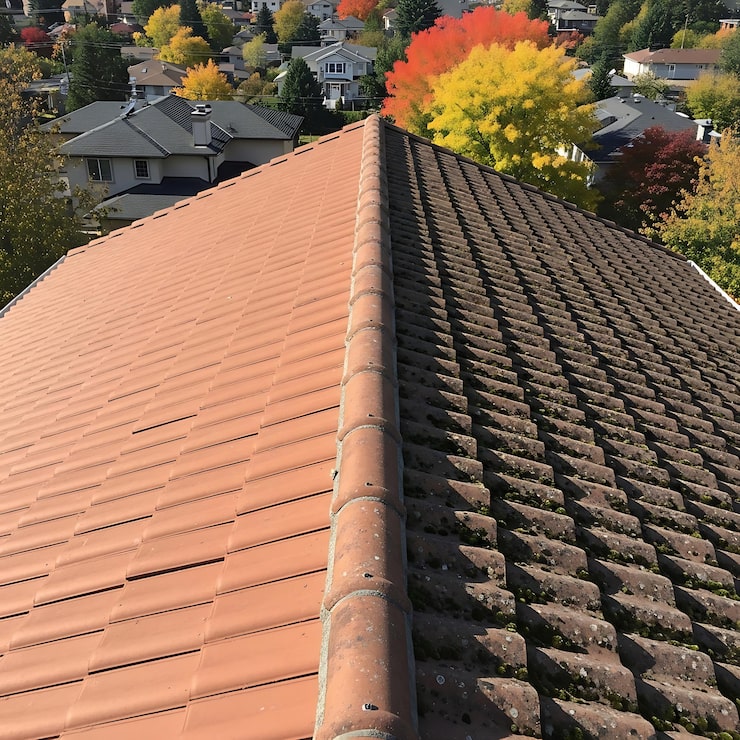
- Moss or lichen covering wide sections and lifting tile edges off the battens below
- A roof beyond 40 years old with no recorded maintenance or replacement history
- Mortar crumbling away from ridge cappings or chimney haunching in large pieces
Several separate leak points emerging within a matter of weeks
When Roof Replacement Becomes the Right Call
Deciding Based on Age
Concrete tile roofs nudging 40 years deserve a professional look even without visible faults. At that age, the underlay tends to give out before the tiles show any movement. Water tracks silently through degraded felt and reaches the timber below. Spotting this before rot sets in avoids a far more expensive structural repair alongside the replacement.
Welsh slate and clay roofs age more slowly. Even so, anything beyond 60 years old without a previous replacement benefits from a five-yearly inspection to confirm the battens and underlay beneath are still doing their job.
Deciding Based on Condition
Sometimes age is not the issue. A falling tree, severe storm, or years of ignored minor damage can bring a younger roof to the point where replacement makes more sense than continued patching. If the felt layer has collapsed across a wide area, or if the timber structure has taken in moisture over a long period, starting fresh is almost always the more cost-effective path.
Comparing Roof Repair Against Full Replacement
Situations Where Repair Makes Sense
- Damage limited to under five tiles on a roof in otherwise good condition
- A single leak traced back to a specific valley or flashing detail
- A roof under 20 years old with no widespread deterioration across the surface
- Wind damage confined to one small section after a storm
- A chimney flashing failure with no problems in the surrounding tile work
Situations Where Replacement Wins
- The same sections have needed repair more than twice in the past five years
- Underlay across large portions of the roof has fully broken down
- Matching replacement tiles or slates are no longer available or affordable
- The material has reached or passed its expected working lifespan
A professional inspection reveals failed battens running beneath the visible surface
What Happens During an Old Roof Replacement UK
The Survey Stage
Every replacement starts with a thorough inspection. A qualified roofer examines tile and slate condition, ridge and hip mortar, lead flashings around chimneys and abutments, plus fascia and soffit boards around the perimeter. Many also check inside the loft. This survey identifies structural work required before any new material goes on and shapes the final written quote.
How the Work Progresses
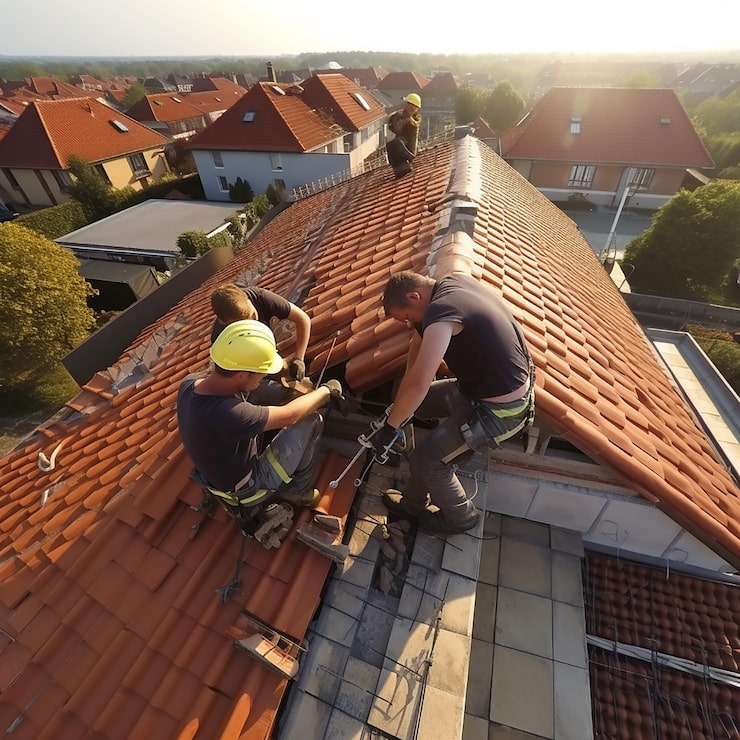
Scaffold goes up first, giving the crew safe access across the whole roof. The old covering strips off in sections. Tiles, slates, and battens are all removed back to the membrane or bare timber. Any rotten rafters or damaged purlins get cut out and replaced at this stage. New breathable membrane then rolls out across the deck. Treated battens fix over it.
Tiling starts at the bottom edge and works upward, finishing at the ridge. Lead work, hip cappings, and ridge pointing complete the job. Scaffold comes down once everything passes a final check.
Cost Factors When Replacing a Roof in the UK
Several things shape what a UK roof replacement actually costs:
- Size of the roof: Every additional square metre increase material quantity and time on site
- Material chosen: Welsh slate costs three to four times more per m2 than standard concrete tiles
- Roof complexity: Hips, valleys, dormers, and chimney stacks each add skilled labour time
- Timber condition: Rotten structural timbers found during stripping push the total upward before a tile goes back on
- Scaffold requirements: Taller buildings and awkward access plots need larger setups at higher cost
- Regional labour rates: Contractors in London and the South East charge 15 to 25 percent more than those based further north
Underlay condition: Fully degraded felt cannot be overlaid, so a complete strip and relay of all layers become unavoidable
Keeping a Roof in Good Condition Longer
Routine attention extends any roof well beyond its average lifespan. Clearing gutters twice a year stops debris pushing water back under tile edges. Treating moss early, before it roots deeply, prevents tiles lifting and damp sitting against the surface through cold months.
A professional inspection every five years catches batten and felt deterioration before it turns into a structural problem. Small consistent actions protect the whole structure and push replacement further into the future.
Conclusion
Every UK roof reaches a point where ongoing repairs stop making financial sense. Recognising that point early, through age, condition, or repeated failures, saves money compared to leaving problems to develop further. Getting itemised written quotes from at least three registered roofers, with labour, materials, and scaffold listed separately, gives homeowners a clear and fair basis for making the final decision.
Frequently Asked Questions
Roof replacement strips the entire existing covering back to the timber frame. New breathable membrane, treated battens, and fresh tiles or slates then go on from scratch. Unlike repairs, which fix specific faults, a full replacement renews every layer of the roof. Most UK properties take three to five days. Larger homes or those with complex roof designs may run to a full week or slightly beyond.
The answer changes depending on your roof type. Welsh slate is the longest-serving option, regularly reaching 80 to 100 years. Clay tiles generally hold up for six to eight decades. Concrete tiles tend to show wear somewhere between 30 and 50 years. On the flat roof side, EPDM rubber performs well for 25 to 50 years, while torch-on felt typically needs replacing within 10 to 20 years. Ventilation and maintenance both influence where any roof lands within that range.
Look for tiles shifting repeatedly across different sections despite recent repairs, damp patches returning on upstairs ceilings after rain, and a roofline that sags visibly from street level. Light entering the loft during daytime and heavy moss lifting wide sections of tile are further indicators. A roof older than 40 years with no previous replacement history also warrants a full professional assessment rather than continued patching.
Repair suits isolated damage on a roof still within its expected lifespan. Once the same sections fail repeatedly, or the underlay across large areas has broken down, replacement becomes the more cost-effective option. As a practical guide, if repair costs approach 40 to 50 percent of a full replacement quote, replacement almost always delivers better value across the following five to ten years.
Costs depend on property size and material. A terraced house typically costs £4,000 to £7,500. Semi-detached homes run between £5,500 and £9,500. Detached houses range from £8,000 to £18,000 depending on size and complexity. Natural slate costs considerably more per m2 than concrete tiles. Requesting written quotes that separate labour, materials, and scaffold makes comparing contractors straightforward and transparent.