
Roof Replacement Insurance UK 2026 – Storm Damage Claims and Cover Explained
Most UK homeowners only think about roof replacement insurance after something goes wrong. By then, gathering the right evidence and understanding policy terms becomes far harder than it needs to be. Knowing how cover works before damage occurs keeps you in full control.
This guide explains how roof replacement insurance UK policies operate, what storm damage cover actually includes, how to claim roof damage insurance correctly, and why so many claims get turned down without warning.
Does Home Insurance Cover Roof Replacement UK
This is the most common question homeowners ask, and the answer depends entirely on what caused the damage rather than how bad it looks. UK buildings insurance is structured around sudden, unexpected events. A storm removing tiles in a single night qualifies. Tiles quietly cracking over several years do not.
Every roof claim goes back to a trigger. If that trigger is a covered event such as a storm, fire, or falling object, the claim has solid footing. If the trigger is age, neglect, or faulty workmanship from a previous roofer, the insurer will not pay out.
What Standard Policies Usually Cover
Most UK buildings insurance policies respond to roof damage in the following situations:
- Storm force winds that lift, crack, or scatter roof tiles across one or more sections
- A tree, chimney stack, or other falling object landing directly on the roof
- Fire damage spreading from inside or outside the property to the roof structure
- Subsidence movement affecting the roof, usually covered under a separate policy section
- Accidental damage where it is included as an optional add-on to the main policy
What Policies Routinely Exclude
Exclusions are just as important to understand as covered events. These are the situations where roof claims regularly fail:
- Wear and tear on tiles, felt, or roof timber that has accumulated over time
- Damage caused by blocked gutters, heavy moss growth, or failure to carry out routine maintenance
- Poor workmanship from a previous roofing contractor
- Flat roofs beyond a specified age, which many standard policies exclude outright
- Gradual water ingress that has built up slowly over several months or longer
Always read the full policy schedule before making any assumptions. Age exclusions and maintenance conditions are frequently placed in the small print rather than the summary pages.

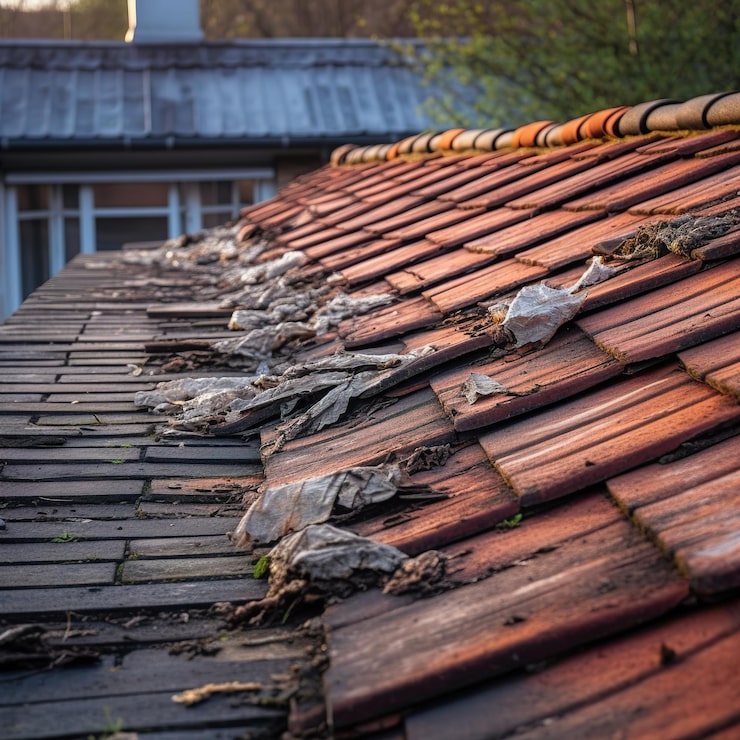
Storm Damage Roof Insurance Claim UK
A storm damaged roof UK gives homeowners the clearest possible basis for a successful insurance claim. However, insurers apply their own criteria when deciding whether a weather event qualifies. Simply experiencing bad weather is not always enough.
What Insurers Count as Storm Damage
UK insurers generally require wind speeds above 50 mph before accepting a storm-related roof claim. Rainfall alone almost never qualifies. The insurer wants evidence of a genuine weather event capable of damaging a properly maintained property.
The types of storm damage that typically qualify under standard UK policies include:
- Tiles lifted, cracked, or scattered across one or more roof sections by high winds
- Ridge tiles shifted or blown off completely during storm force gusts
- Flat roof membrane torn away by sustained wind pressure
- Structural roof damage caused by a tree landing on the property during a storm
- Chimney collapse onto the roof surface during a recorded severe weather event
Two Real-World Claim Outcomes
Picture two homeowners affected by weather events in the same week. A homeowner in Sheffield loses eight tiles after a named storm passes through. Met Office records confirm wind gusts above 55 mph in that area overnight. The claim proceeds quickly because both cause and timing are clearly documented.
A second homeowner in Bristol submits a claim after heavy rain produces ceiling stains. A loss adjuster visits and finds cracked tiles with moss growing underneath them. The insurer categorises it as pre-existing wear. The claim is rejected outright. Both outcomes come down entirely to evidence and established cause.
How to Claim Roof Damage Insurance
Knowing how to claim roof damage insurance properly is just as valuable as holding the right policy. A poorly handled claim can be rejected even when the damage is genuinely covered. Follow these steps in sequence.
Step by Step Claim Process
Act before anything is moved or cleaned away. Photograph all visible damage from ground level and from inside the loft. Capture wide overall shots alongside close-up detail images. Then contact your insurer the same day. Late reporting weakens your claim and may breach the policy notification conditions.
After registering the claim, arrange a written assessment from a qualified roofer. This report should confirm both the cause and the full extent of the damage. It supports your case before the loss adjuster visits. If the roof is open to further weather, carry out emergency temporary repairs right away and keep every receipt.
Hold off on permanent repairs until the loss adjuster has completed their visit and confirmed findings in writing. Starting permanent work before inspection can invalidate the claim completely.
Documents to Have Ready
Preparing the right paperwork speeds the entire process up:
- Dated photographs and short video clips of all visible damage
- Written report from a qualified roofer confirming cause and full extent
- Current buildings insurance policy schedule and certificate of insurance
- Met Office weather data confirming storm conditions on the relevant date
Receipts for any emergency temporary repairs already completed
Common Roof Problems and Insurance Cover
Leaking Roof Replacement UK
A leaking roof replacement UK claim only succeeds when the leak connects directly to a sudden covered event. Storm damage that cracks tiles and lets water through gives the claim a clear foundation. By contrast, a slow leak building up gradually over months almost always gets classified as wear and tear. The documented cause of the leak matters far more than the leak itself. A roofer’s written report confirming when the damage started and what triggered it is essential evidence here.
Storm Damaged Roof UK
Storm damaged roof UK claims give homeowners the clearest route to a successful outcome. Strong evidence linking the damage to a specific named storm or recorded weather alert leaves the insurer with very little room to refuse. Where possible, note whether the damage date matches a Met Office weather warning. This one step can shorten the approval process considerably.
Missing Roof Tiles UK
Missing roof tiles UK claims qualify under most standard policies when a storm or sudden event caused them to shift. Tiles reported missing weeks after a potential weather event significantly weaken the case. Report missing tiles as soon as you spot them. Connecting the loss to a specific recent event with Met Office weather confirmation gives the claim its strongest possible foundation.
Roof Sagging Repair UK
Roof sagging repair UK claims receive close scrutiny from insurers. Sagging caused by a sudden impact, such as a falling branch after a storm, may well qualify for cover. Sagging that has developed gradually over time sits firmly in the wear and tear category. Insurers send a surveyor to inspect sagging claims carefully. Having a qualified roofer’s written report ready before that visit takes place is always worthwhile.
Reasons Roof Insurance Claims Get Rejected
Understanding why claims fail helps you avoid the same mistakes:
- Damage classified as gradual wear and tear with no link to a sudden event
- Roof condition was already deteriorating before the reported incident occurred
- Claim reported too late after the damage took place
- No photographs taken at the time the damage happened
- Flat roof age exclusion applying under the specific policy terms
- Weather event failing to meet the insurer’s formal storm definition
- Permanent repairs carried out before the loss adjuster completed their inspection
Policy lapsed or premiums unpaid when the damage occurred
Roof Repair vs Replacement Insurance Decisions
Once a claim is accepted, the insurer determines whether to fund a repair or a full replacement. This decision rests on the extent of the damage and the practical cost of each option.
Repair is the more likely outcome when only a small section of tiles is affected, the underlying roof structure remains sound, and the roof was in good overall condition before the event.
Full replacement becomes the appropriate response when a large portion of the roof surface has sustained storm damage, the felt or timber structure underneath was also harmed, matching tiles are no longer available, or the loss adjuster concludes that a repair is not a durable long-term solution for the property.
Tips to Improve Your Claim Approval Chances
These practical steps improve the outcome of any roof damage insurance claim:
- Take dated photographs and video of all damage immediately after it occurs
- Report the claim to your insurer on the same day and not days later
- Get a written roofer assessment completed before the loss adjuster visits
- Download Met Office weather data confirming storm conditions on the damage date
- Save all receipts for emergency temporary repairs carried out on the property
- Hold off on permanent repairs until the loss adjuster signs off their inspection report
Check your policy excess first because minor repairs may cost less than the excess
Your First Actions When Roof Damage Occurs
Speed and preparation in the hours after roof damage can determine whether a claim succeeds or fails. How you respond right away builds the evidence your insurer needs.
Do not attempt to climb onto the roof under any circumstances. Photograph all visible damage from ground level and from inside the loft space. Put containers or sheeting indoors to catch water and protect your belongings. Contact your insurer the same day to formally log the incident.
Arrange a temporary tarpaulin or emergency boarding through a qualified roofer if the roof is exposed to the elements. Write down the exact time you first noticed the damage and describe the weather conditions that came before it. This simple written record becomes useful supporting evidence later in the claims process.
Conclusion
Roof replacement insurance UK cover follows one core principle. Sudden damage caused by storms, falling objects, or fire qualifies. Gradual wear, maintenance failures, and workmanship defects do not. Understanding that distinction, acting without delay after an incident, and building a thorough evidence file gives any homeowner the strongest possible position when submitting a claim.
Review your policy schedule before storm season arrives. Know your excess, check for flat roof age clauses, and understand which events your cover genuinely responds to. Preparation before a claim is always simpler than navigating confusion after the damage has already occurred.
Frequently Asked Questions
Home insurance covers roof replacement when a sudden insured event causes the damage. Storms, falling objects, and fire typically qualify under standard UK buildings insurance. Wear and tear, poor maintenance, and contractor workmanship failures do not. Always check your policy schedule carefully for flat roof age exclusions and any specific maintenance conditions before assuming your claim will be accepted.
Photograph all damage on the same day it occurs. Contact your insurer immediately to register the claim. Arrange a written report from a qualified roofer before the loss adjuster visits. Gather Met Office weather data confirming storm conditions on the relevant date. Keep all receipts for emergency temporary repairs. Avoid permanent repairs until the loss adjuster has completed and confirmed their full inspection findings.
Most rejections happen because damage is traced to gradual wear rather than a sudden event. Other common causes include late claim reporting, insufficient photographic evidence, and permanent repairs starting before the loss adjuster completes inspection. Flat roof age exclusions, unpaid premiums, and weather events below the insurer’s storm threshold also result in regular rejections across the UK.
UK insurers broadly expect wind speeds above 50 mph before a storm claim is accepted. Hail, heavy snow loading, and tree impact during storms also qualify under most standard policies. Rain by itself rarely satisfies the storm definition. A qualifying claim needs visible structural damage or confirmed high-force wind alongside any rainfall recorded on the same date.
Missing tiles qualify for an insurance claim when a storm or sudden event directly caused them to shift. Tiles lost through age, deterioration, or poor original fixing fall outside standard cover. Report missing tiles promptly after adverse weather. Connecting the loss to a specific recent event with Met Office weather data gives the claim the clearest and strongest possible basis for a successful approval.