
How to Replace a Roof UK: Complete Process, Planning Permission and Step Guide
Replacing a roof ranks among the biggest jobs a UK homeowner will ever take on. Whether your covering has simply worn out or taken storm damage, getting the process right saves money and avoids costly mistakes. This guide covers every stage from the first inspection to the final sign-off, including the planning permission rules you need to know before work starts.
Roof Replacement Process UK Explained
Good preparation prevents problems later. Most UK roofers split the early work into three clear stages before any materials are ordered or scaffolding goes up.
Initial Roof Inspection
Every roof replacement starts with a proper inspection. A qualified roofer checks for cracked or slipped tiles, damaged flashing at chimneys and skylights, worn felt underlays, and any rot in the roof timbers. Many homeowners first spot damp patches on ceilings or see daylight through the loft boards. Both signs point clearly to a full replacement rather than a patch repair. Ask your contractor to give you a written survey report. It sets out the scope of work and protects you if disagreements arise later.
Cost Estimation and Planning
Once the survey is done, your contractor produces a detailed quote. Prices vary based on roof size, pitch, material type and how easy it is to access. A standard three-bedroom semi with clay or concrete tiles usually costs between £5,000 and £12,000. Slate pushes that figure higher because of material and labour costs. Get at least three written quotes. Check that VAT appears on each one and confirm the contractor carries valid public liability insurance before you sign.
Hiring a Professional Contractor
Picking the wrong roofer causes problems that are hard and expensive to fix. Contractors with NFRC membership or a TrustMark registration have passed independent checks on their skills and insurance, which gives you a safer starting point. Before signing anything, ask for photos or addresses of recent similar jobs. Find out who arranges and insures the scaffold. Read the contract carefully to confirm it names the exact materials, states the guarantee length, and lists a clear payment schedule. Never hand over a large deposit before work starts.

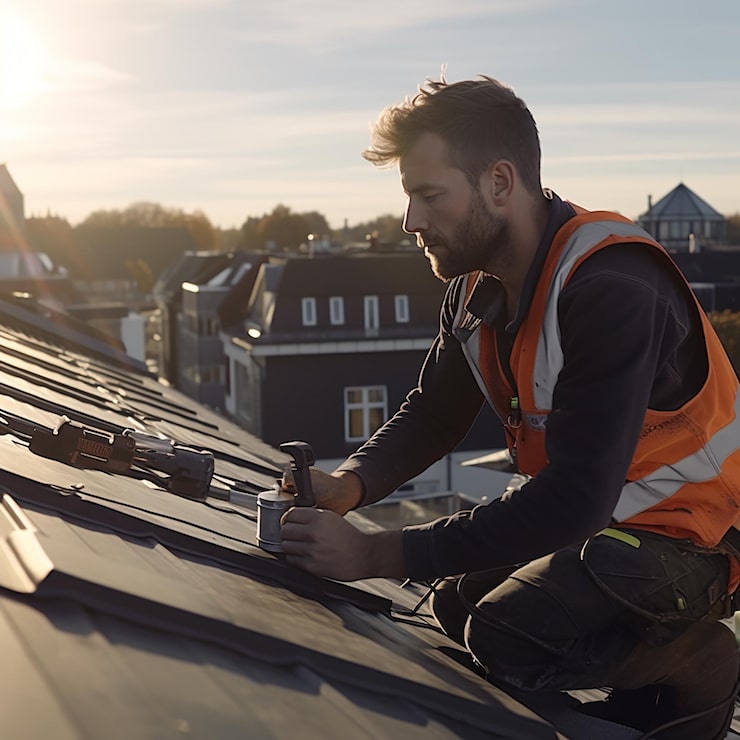
Step by Step How to Replace a Roof UK
Once the preparation is done, the physical work moves through four clear stages. Knowing what happens at each one helps you track progress and flag any concerns with your contractor quickly.
Step 1: Removing Old Roofing Materials
Scaffolding goes up first to give the crew a safe platform. Workers then lift and remove the existing tiles, slates or flat roof covering, along with the old felt underlay underneath. Debris drops into skips or heavy bags at ground level. This phase is noisy, so warn your neighbours beforehand. Make sure your contractor explains how they will protect the open roof from rain each evening until new materials go on.
Step 2: Checking Roof Structure
A stripped roof gives your contractor clear sight of every timber. The crew checks each rafter for rot, splits and woodworm. Ridge boards, purlins and binders also get tested for movement. Any damaged timber gets cut out and replaced, not patched. Sound timbers receive a preservative treatment at this point. Roofers who skip this stage quickly generate callbacks and disputes, so ask your contractor to walk you through what the inspection found.
Step 3: Installing New Roofing Materials
The crew fixes a breathable roofing membrane across the rafters or deck first. This acts as a secondary weather barrier and replaces the old bitumen felt used for decades. Battens go over the membrane to create an airflow channel. Tiles or slates then lay from the eaves upward in overlapping rows. Ridge and hip tiles use either mortar or a dry-fix system. Dry-fix is now the preferred method under UK building regulations. Flashings at chimneys, skylights and wall abutments are replaced or reformed in lead based on their condition.
Step 4: Final Inspection and Cleanup
Ask to join your contractor for the completion walkthrough before the scaffold comes down. Check that ridge and hip tiles sit firmly, flashings seal correctly, gutters are clear, and no daylight shows through the loft. Your contractor should hand you a written workmanship guarantee at this point, usually between five and twenty years depending on the firm, plus any manufacturer guarantees on materials. After the scaffold leaves, walk around the garden and driveway to confirm the team has cleared all debris and made good any damage.
Do I Need Planning Permission to Replace a Roof UK
This question comes up on almost every roof replacement job. The answer depends on your property type, location and the materials you choose. Getting it wrong can mean an enforcement notice from your council and the cost of undoing completed work.
When Planning Permission is NOT Required
Most standard replacements in England fall under permitted development. This means you do not need a planning application before work starts. The main condition is that new materials must closely match the old ones in look and profile. Swapping worn concrete tiles for matching new ones is a classic example of qualifying work. Keep the shape, ridge height and footprint exactly as they are. Any change to those elements moves the project out of permitted development and into a full planning application.
When Planning Permission IS Required
Some properties always need a planning application regardless of the work involved. Conservation areas impose stricter rules, and changing roofing materials that alter the building’s character requires prior approval from the local planning authority. Listed buildings need listed building consent on top of planning permission, no matter how minor the job looks. Properties subject to an Article 4 Direction have also lost their permitted development rights and must apply formally. If you are unsure which category applies to your home, call your local planning department and ask for a response in writing before work starts.
UK Building Regulations Overview
Building regulations are separate from planning permission. They set the technical standards your new roof must meet. Part A covers structural safety, making sure the roof handles wind, snow and its own weight without failure. Part C covers weatherproofing, which is why breathable underlays now replace old bitumen felt. Part L covers energy efficiency, and flat roof replacements must hit updated insulation values under current rules. Tell your local building control body before work begins. An inspector may visit at key points during the job. Once they are satisfied, they issue a completion certificate. Keep that certificate safe, as buyers and their solicitors will ask for it.
Materials Used in Roof Replacement
The material you choose affects how the roof looks, how long it lasts and what you pay. The UK market offers several well-proven options. Each suits different property types and budgets, so it pays to compare them before agreeing a quote.
Tile Roofing
Clay and concrete tiles cover the majority of pitched roofs replaced across the UK. Concrete tiles offer good value and come in many profiles and colours. They last roughly 40 to 60 years with correct fitting. Clay tiles cost more but last longer, often reaching 80 years or beyond. Their natural look also makes them popular in areas where planners pay close attention to materials. Both types work well with modern dry-fix ridge systems and breathable underlays.
Slate Roofing
Natural Welsh slate sits at the top end of the market for good reason. It resists fire, handles the UK climate well, and can last well over 100 years. The main downside is cost. Welsh slate costs significantly more than tile in both materials and labour, as fitting it properly requires a skilled tradesperson. Spanish and Brazilian slate offer a cheaper entry point, though neither tends to match the lifespan of domestic Welsh stone.
Flat Roof Materials
Flat and low-pitch roofs need completely different products from pitched coverings. EPDM rubber is now a popular choice. It handles UV exposure well, stays flexible in cold weather, and typically carries a 20-year-plus guarantee. GRP fibreglass creates a seamless finish that suits complex shapes and areas with many penetrations. Traditional multi-layer felt still appears on some jobs but contractors increasingly favour the longer-lasting rubber and fibreglass alternatives.
Time Required for Roof Replacement UK
Job length depends on roof size and complexity. A standard semi-detached with a simple pitched roof takes three to five working days once the scaffold is up. Larger detached homes with hips, multiple valleys or chimney stacks can run to seven or ten days. Flat roofs on extensions often wrap up in one or two days. UK weather adds uncertainty to every timeline. Experienced roofers strip only what they can fully cover before dark, so your home stays protected each night.
Common Mistakes to Avoid During Roof Replacement
Skipping the timber check after stripping is the most expensive error roofers and homeowners make. Taking the cheapest quote without checking credentials, insurance and material standards is another trap. Old bitumen felt is a growing problem too. Building control officers in many areas now reject it on inspection, which means the job has to stop until a breathable membrane goes in instead. Valley linings and flashings often get overlooked during a full replacement, yet failing to renew them brings leaks within a few years. Raise these points with your contractor at the quote stage, not once work is under way.
Frequently Asked Questions
Concrete tiles last roughly 40 to 60 years when fitted and maintained correctly. Natural Welsh slate regularly passes the 100-year mark. Modern flat roof systems such as EPDM rubber carry manufacturer guarantees of 20 to 25 years, and many last longer with regular checks and minor upkeep.
You rarely need to leave. All the work happens on the outside, so life inside continues as normal. Good roofers cover loft hatches to keep dust out of living areas. They also strip only what they can re-cover the same day, so the house stays dry each night throughout the job.
Yes, it does. Buyers and their surveyors look hard at roof condition. A recently replaced roof with a building control certificate removes one of the most common causes of price cuts during negotiation. Homes with clear evidence of roof work tend to sell faster and attract stronger offers than those where the roof age is unknown.
Any solid contractor backs their work with a written guarantee of at least five years. This sits alongside whatever the tile or membrane maker offers on materials. NFRC members can sometimes access deposit protection schemes that safeguard your money if the firm closes mid-job. Always get the guarantee in writing before work starts, not at the end.